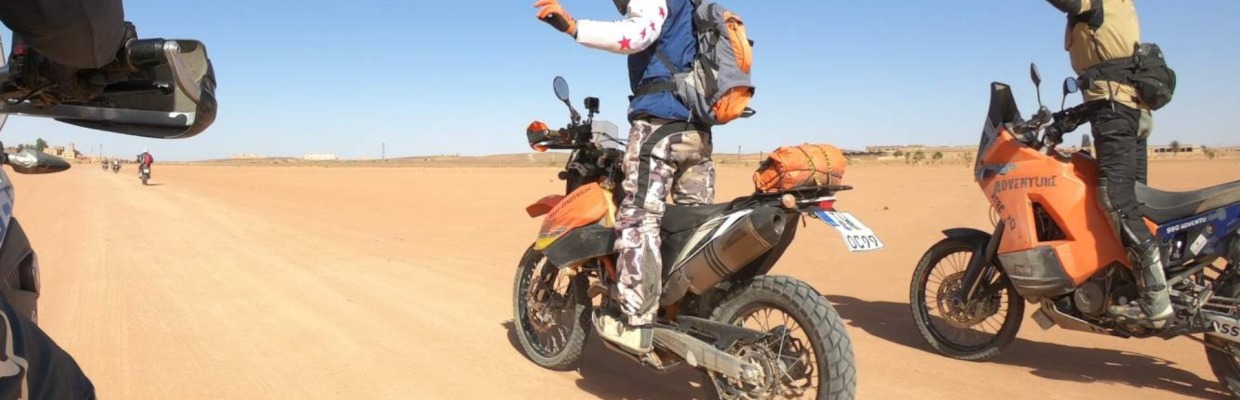
I've gotten involved in an adventure with Overcross twice and I wasn't disappointed. Morocco and Namibia off-road with the motorcycle. Two unforgettab...
OVERVIEW
Listen to audio tour
0:00
0:00
Morocco motorcycle tour: The Enduro Trip through Atlas and Sahara
This ride carries its name for a reason. "In the Footsteps of the Alchemist" takes its title from the novel by Paulo Coelho — the story of a seeker on a journey full of trials, magic and self-discovery. You feel the same thing in the saddle, as you push your enduro through the endless play of sand, stone and light.
The route runs between the passes of the High Atlas and the dunes of the Sahara. This is the essence of travel: freedom, adventure and one long enduro dream. Our experienced guides lead you along winding mountain roads, dusty tracks and through oases where time stands still.
When the sun sets and the sky turns gold, you realise it. This is not a standard trip. This is your own adventure on two wheels.
Introduction to the motorcycle journey through Morocco
This ride takes you over the High Atlas to the edge of the Sahara. You cross passes, deserts, oases and old caravan routes. Pure riding, rich culture and the feeling of freedom on two wheels — one trip that blends adventure and real Morocco.
Tour at a glance
Expert levelDuration
15 days
14 nights
Distance
2,300 km
total route
Daily stages
160–220 km
40% road · 60% off-road
Start & finish
Marrakech — gateway to southern Morocco
Route character
Asphalt, gravel, and advanced off-road sections
Landscapes
Atlas Mountains, Draa Valley, Erg Chegaga, Sahara dunes, oases, and kasbahs
Climate
Atlas: mild to cool · Sahara: hot and dry, over 30 °C by day
Cultural highlights
Imperial cities, Berber villages, traditional crafts, and old kasbahs
Special experiences
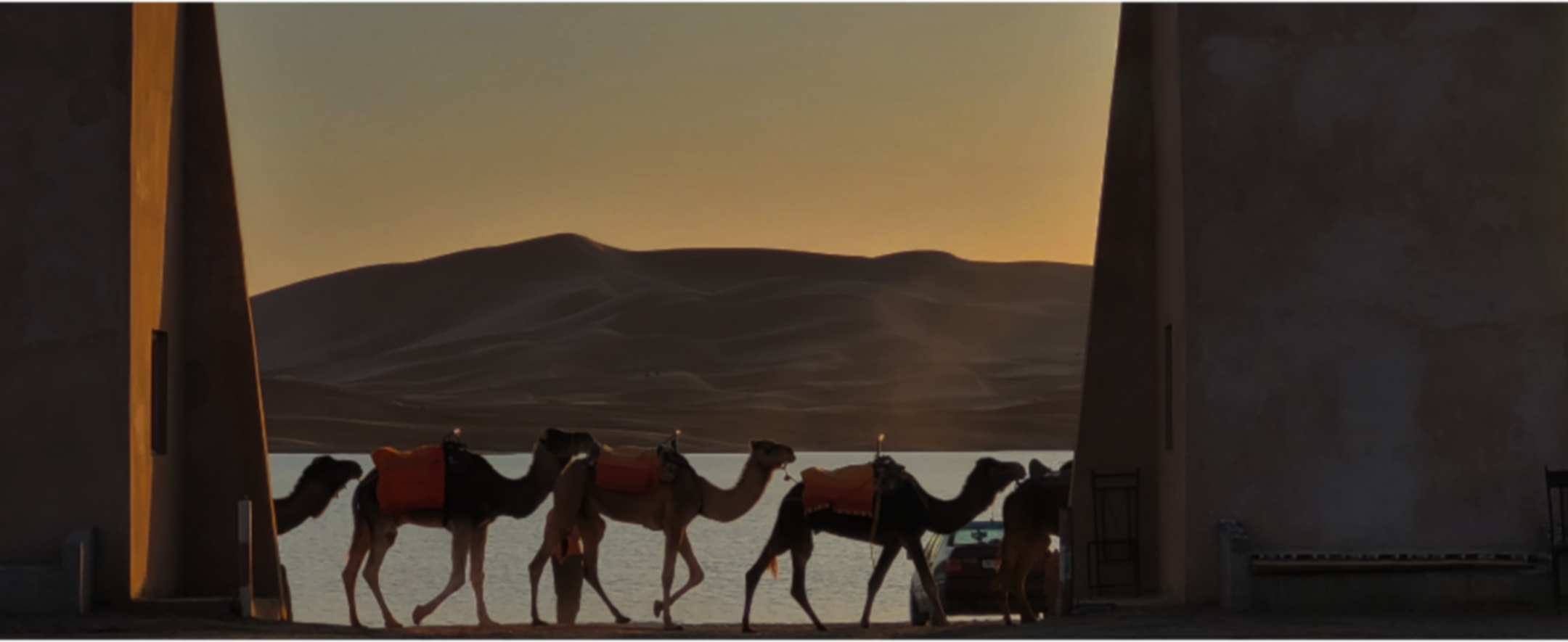
Camel ride in the Sahara, panoramic Atlas passes, nomad camps under the stars
Travel character
A mix of nature, culture, and motorcycle adventure
For whom
Experienced enduro and motorcycle riders who want the real Morocco
Daily program: The Alchemist's Trail: Morocco Enduro Adventure
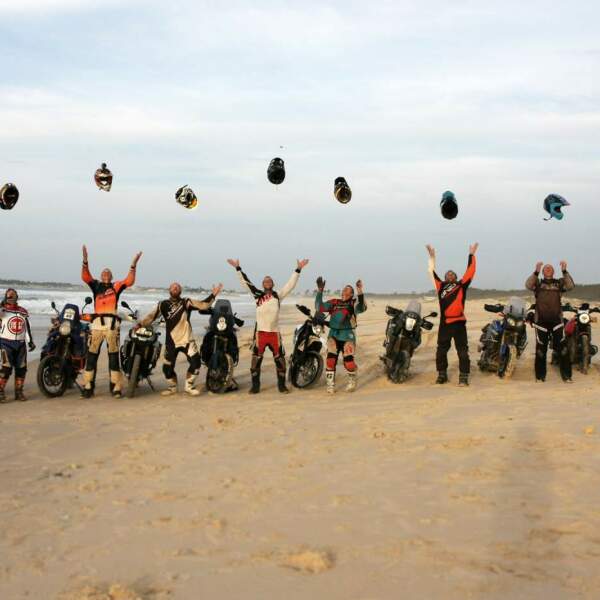
1: Arrival for the motorcycle trip in Marrakech
Land at Marrakech-Menara Airport (RAK) and take a taxi to our camp in the city. Your bike is already there, waiting for you. We take day one easy. We unload the bikes from the transporter and hold a briefing on the tour and the stages ahead. Then we prep the gear, ready for the first ride south in the morning.
2: Over the High Atlas to Taliouine
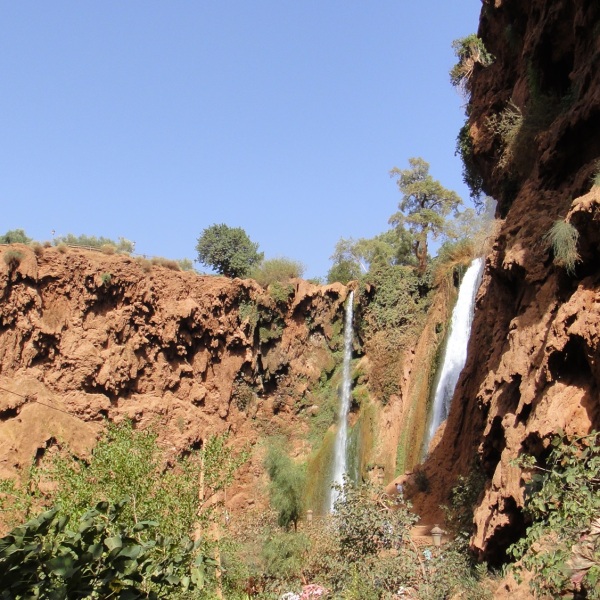
After a solid breakfast, we head south and cross the High Atlas. This mountain range sits in the heart of Morocco and its highest peak tops 4,000 metres, so some beautiful passes lie ahead. The pass road is now sadly paved, but it still makes a great warm-up for the ride. Views over the land are guaranteed, and this Atlas stretch is an absolute highlight for any rider.
We arrive in Taliouine, a small town in the Souss-Massa region known for its saffron. We set up camp, cook together and look ahead to tomorrow, when we hit the trails and the real off-road part of the trip begins.
3: Taliouine - Foum Zguid: The way into the desert
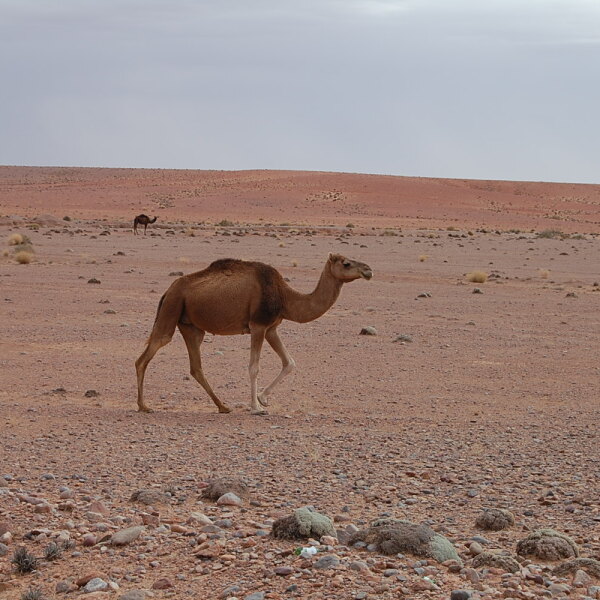
After a night under the Moroccan stars and a shared breakfast, we ride our first off-road kilometres. Today's target: the oasis town of Foum Zguid. We plan the route so the group starts easy and the difficulty builds up as we go. After more than a decade running this trip, we can say one thing for sure. No two rides are the same, and every group meets new challenges on the way.
This is an adventure, not a package holiday for couch potatoes.
Foum Zguid is a small oasis town in the south of Morocco, on the edge of the Sahara. Locals call it the gateway to the desert. Palm groves surround the town on every side.
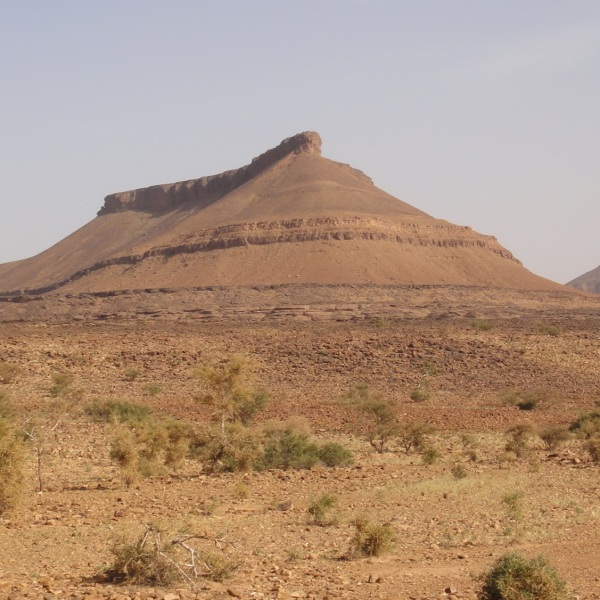
4: Foum Zguid Round Course: In the footsteps of 007
Day four is pure off-road fun. We leave camp and cross the barren plain south of Foum Zguid. Film fans will know it — this is where "James Bond 007 Spectre" was shot.
A huge tabletop mountain rises in the middle of nowhere. That is our target for the day. The terrain shifts between sand, stone and dry wadis on the way — perfect for experienced riders. We return to camp in the afternoon. The sunset and the crackle of the campfire bring back the magic of Africa.
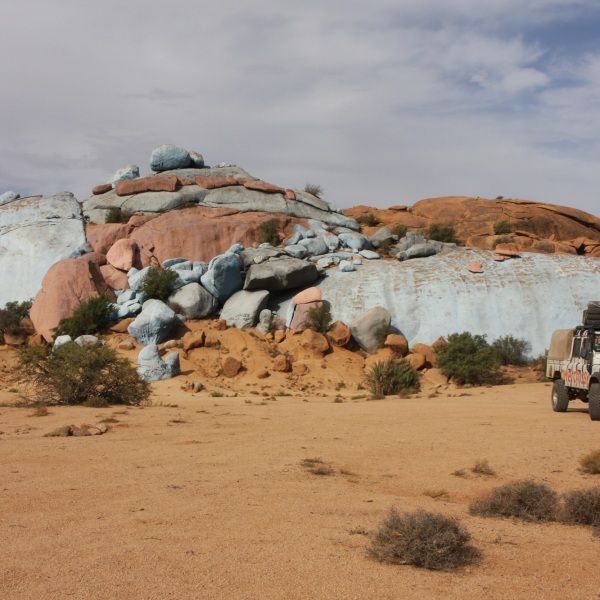
5: Foum Zguid - Erg Chegaga: The Call of the Sahara
We set off early, heading southeast. The day takes us through Iriki National Park and past its dry salt lake, Lac Iriki. The terrain keeps shifting: hard tracks, flat plains, soft sand.
By afternoon, the first dunes of Erg Chegaga come into view. This is one of the largest and most beautiful sand landscapes in Morocco. Here the most magical part of the ride begins. We set up camp on the edge of the Sahara. The sun drops behind the dunes, and the stars above look close enough to touch.
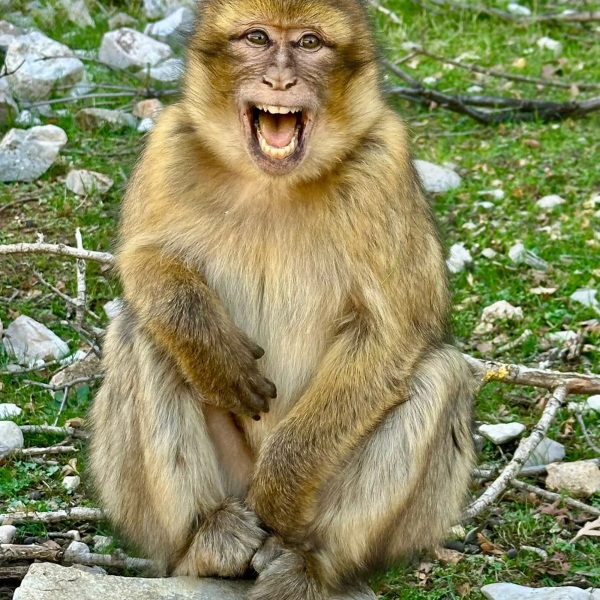
6: Erg Chegaga - Mhamid - Zagora: From sand to the oasis
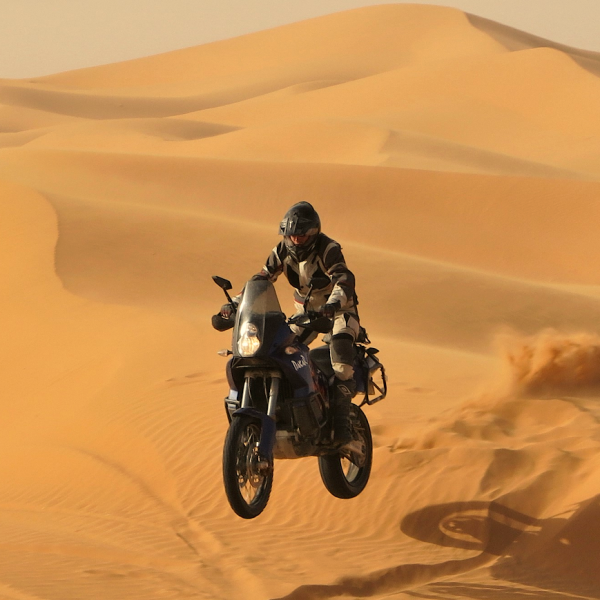
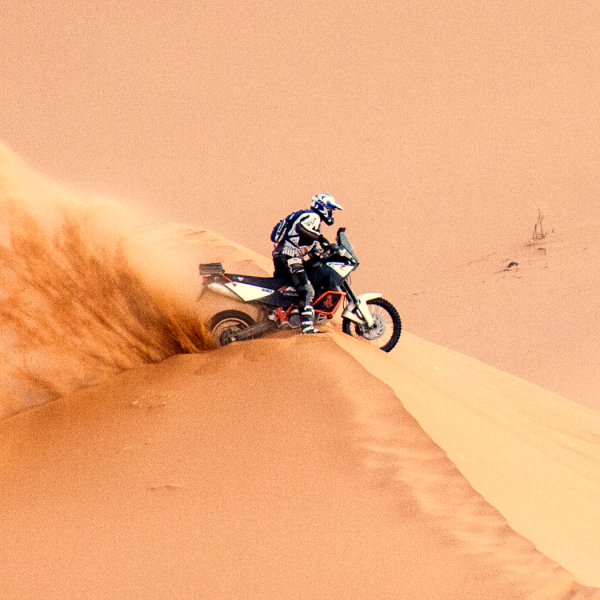
After breakfast, the challenge of the day begins. A dune field, about ten kilometres long, demands everything you have — physically and technically.
We take a break in Mhamid, a small oasis town on the edge of the Sahara. From there we ride on tarmac to Zagora. The town sits in the fertile Dra Valley, surrounded by palm groves, kasbahs and old trade routes. Here you feel why Morocco is so unique for a ride like this: desert, mountains and culture — all in one day.
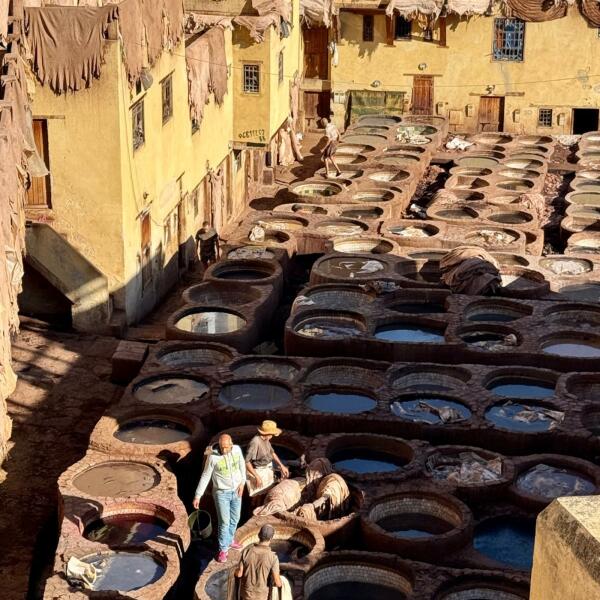
7 & 8: Zagora - Erg Chebbi: Two Days to the Sea of Sand
From Zagora, the route starts on short tarmac sections, then drops into the vast outback. This is the heart of the trip.
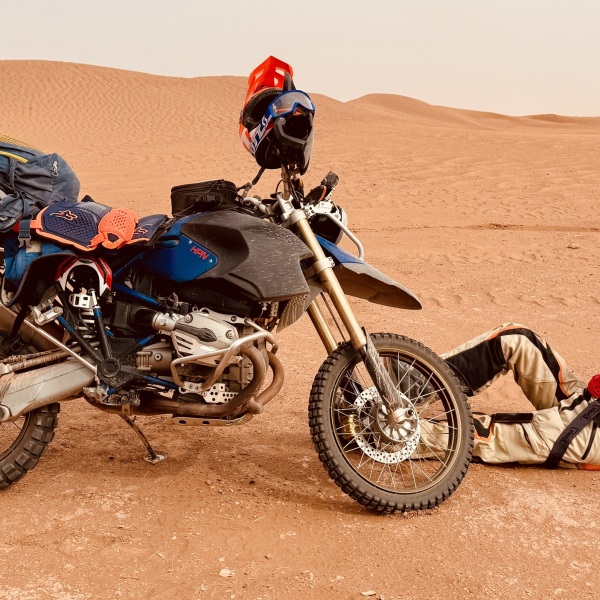
For two days, we cross varied terrain: deep sand, rocky passages and endless plains that stretch to the horizon. Along the way, we set up a wild camp far from roads and light.
The next day, the golden dunes of Erg Chebbi appear on the horizon. You do not forget that moment. This is the largest dune area in Morocco, rising up to 300 metres — a landmark of any ride through the Sahara.
9: Erg Chebbi - Circuit and Rest
After several intense off-road days, today is yours. If you still have energy, take the loop around Jbel Bega — a tough ride along the Algerian border.
Prefer to rest? Go for a dune hike, share tea with the Berbers, or take a bath at camp. Wherever you spend the time, the view of Erg Chebbi turns every moment into one of freedom and silence.
Note: This day offers a real choice between action and rest, which brings up many questions. Whether you want the loop ride, a dune hike or a quiet day — just ask us in advance.
10: Erg Chebbi - Alnif - Tinghir: From the sand sea to the mountains
Today we say goodbye to the dune sea of Erg Chebbi. After breakfast, the route first takes us over tarmac to Alnif. From there we switch to a varied off-road link towards Tinghir.
The landscape shifts fast — desert plains give way to rock, sand turns to stone. We reach Tinghir in the late afternoon. It is a small town with palm oases and a view of the Atlas foothills. This stage alone shows why riding in Morocco never gets old.
11: Tinghir - Boumalne Dadès: Through gorges and over high passes
One of the most spectacular stages of the whole trip waits for you today. From Tinghir, the road winds through the narrow Todra gorge. Red rock walls rise hundreds of metres above you on both sides.
From there, the route splits — weather and group pace decide the call. Option one: the 2,990-metre Aghoudal pass. Option two: a tougher dirt track into the Dadès gorge. A mix of tarmac, gravel and panorama turns this day into a true Atlas highlight.
12: Boumalne Dadès - N’Kob: Circuit through the Jbel Saghro
The direct road from Boumalne to N'Kob is now paved, so we ride a loop instead. The route goes deep into Jbel Saghro. Strange rock formations, wide plains and gravel roads take turns. Pure off-road joy.
We pass through small Berber villages and take in the wide open southern Atlas. By afternoon we are back in N'Kob, where a nomad camp waits for us. When the evening wind moves through the palm trees and the fire starts to crackle, you see why a trip like this is more than just a vacation.
13: N’Kob - Ouarzazate: On the trails of great films
From N'Kob, a new off-road route leads us north to Ouarzazate, also known as the "Hollywood of the desert." The landscape looks straight out of an adventure film. That is no accident — classics like Gladiator and Kingdom of Heaven were shot right here.
Today's stage mixes culture and riding joy. Gravel, tarmac and endless valleys take turns under the wheels. We reach the city in the afternoon. From there you can visit the film studios or just relax at camp. Ouarzazate blends old-world flair with modern desert charm.
14: Quarzazate - Aït-Ben-Haddou - Marrakech: Back over the Atlas
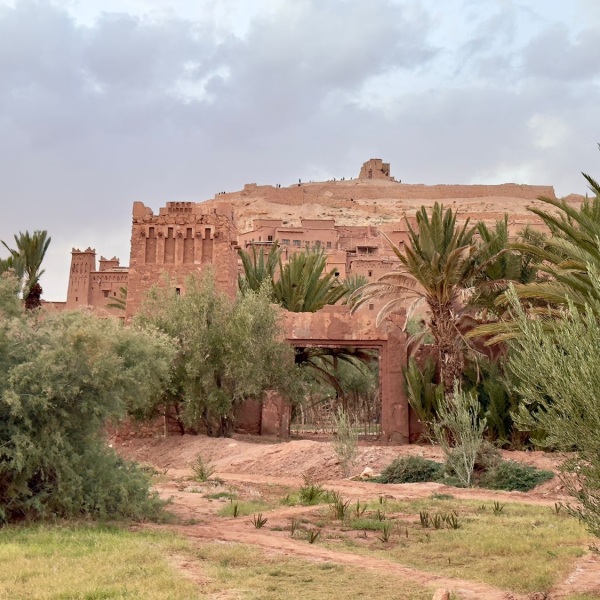
The second-last day still holds one real highlight. We visit the fortified city of Aït-Ben-Haddou, a UNESCO World Heritage Site. Its adobe walls and narrow alleys offer a deep dive into the history of Morocco.
After that, we cross an impressive High Atlas pass on the way back to Marrakech. The last kilometres are a pleasure — a mix of pride, nostalgia and pure satisfaction. Back at camp, we raise a glass to two weeks of adventure, full of dust, sun and memories we will not forget.
15: Marrakech: Farewell from the motorcycle journey through Morocco
After the last breakfast, it is time to say goodbye. We load the bikes and pack the gear. With a final look over the rooftops of Marrakech, it hits you. The ride ends here, but the memories stay.
You have lived through deserts, mountains, oases and people who show you what travel really means. Until the next adventure on two wheels. Shukran and goodbye, Morocco.
×
![]()
What participants say about Motorcycle tours in Marokko
PRICE
from€2989.00 / person✓ Trip includes
✕ Trip does not include
- English-speaking tour guide
- Accompanying support vehicle
- All overnight stays in Morocco outdoor (on campsites & wild)
- Breakfast and dinner from the "expedition kitchen"
- All permits and entry fees
HIGHLIGHTS
Motorcycle trip between Atlas and Sahara:
Experience off-road driving on sandy and stony paths in Morocco's impressive landscapes.
Discover Nomad Paths:
Travel on the trails of the salt caravans and learn more about the nomadic life in the desert.
Gorges and dunes of Todra:
Enjoy exciting passes and breathtaking photo stops between the majestic gorges.
Marrakech: Start your journey:
Begin your adventure in Marrakech, the lively royal city, full of culture and oriental flair.
Erg Chegaga: A desert experience:
Erg Chegaga is one of the largest dune regions of Morocco, where the sand dunes are up to 300 meters high. Here we spend the night under a fantastic star tent, experience the sunset, and enjoy the tranquility of the desert. This unforgettable setting offers a perfect backdrop for adventure and nature lovers who want to seek the true Moroccan desert experience.